This article comes from C&CPF’s newsletter Good Work, where every other month Director Erik Takeshita shares thoughts, ideas, and observations about how to support the grassroots efforts that make communities thrive.
To receive these insights in your inbox, subscribe to the newsletter here.
In February, I left snowy Minnesota to visit Utica, Mississippi.
Utica is a small town in the southwest corner of the state (population ~800). The weather was warm and wild flowers bloomed in the planters and cracks in the sidewalk.
Two of C&CPF’s Grantee-Partners, the Center for Transforming Communities (CTC) from Memphis and Ashé Cultural Center from New Orleans, were in Utica to visit Mississippi Center for Cultural Production (Sipp Culture), by invitation from its Co-Founder & Co-Director Carlton Turner. I gratefully tagged along.
Carlton’s family has been in Utica for eight generations. He’s dedicated to the town and its future. But what he and the team at Sipp have seen over the last few decades is loss after loss—first the factory, then the high school. Last year, the only gas station shuttered.
This is a familiar narrative, and it bears a familiar question: When we lose the industries that once helped us thrive, how do we draw on the strengths of our community to build a new path forward?
Sipp shows us one way.

There’s only one set of stop signs in Utica, at the intersection of White Oak Street and Main Street. Carlton told us pretty much everyone in town passes through here, many people a few times a day. At that intersection is a building that had been abandoned and vacant for more than two decades. Carlton suspected that the downtrodden building influenced the way people felt about their hometown, and its future.
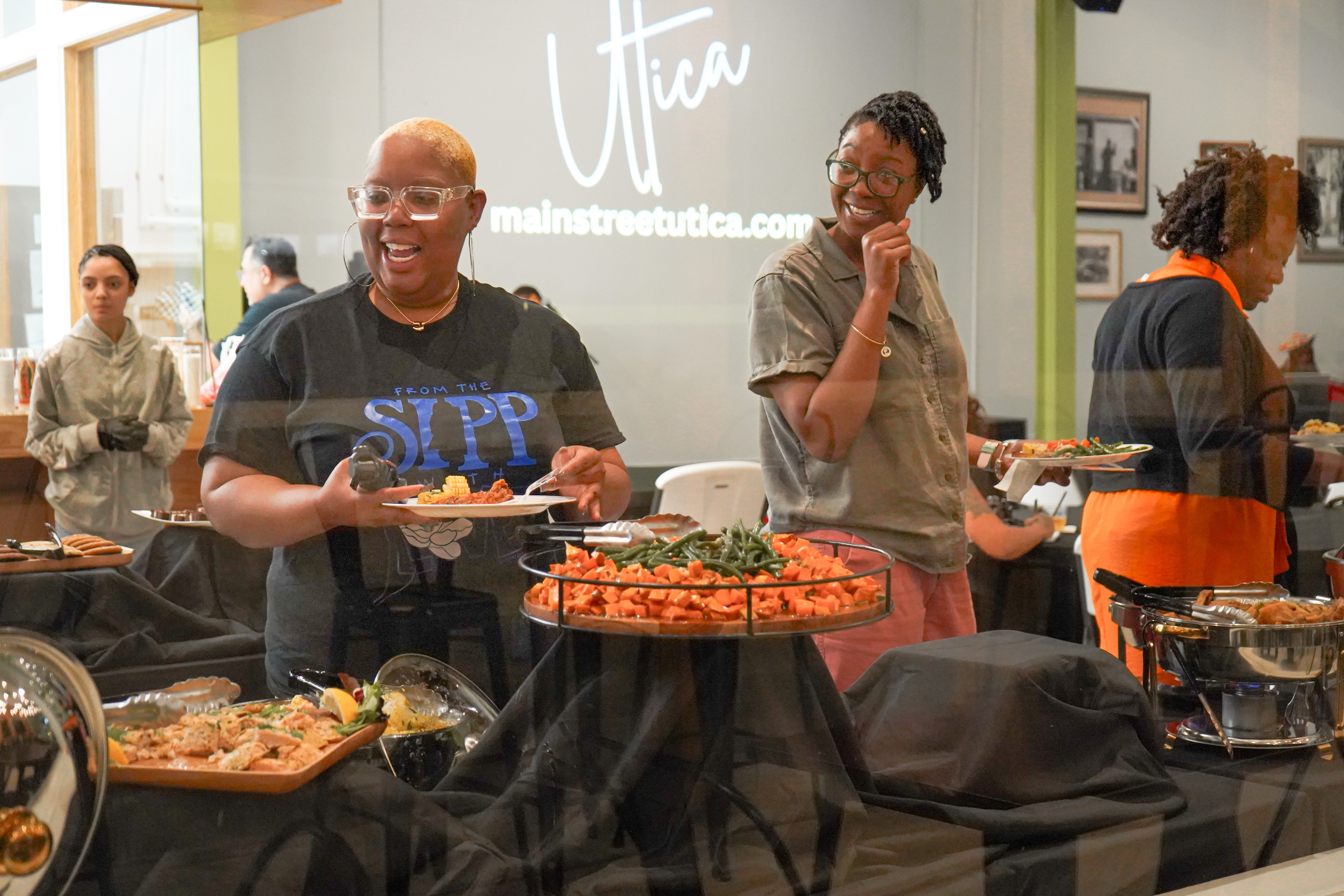
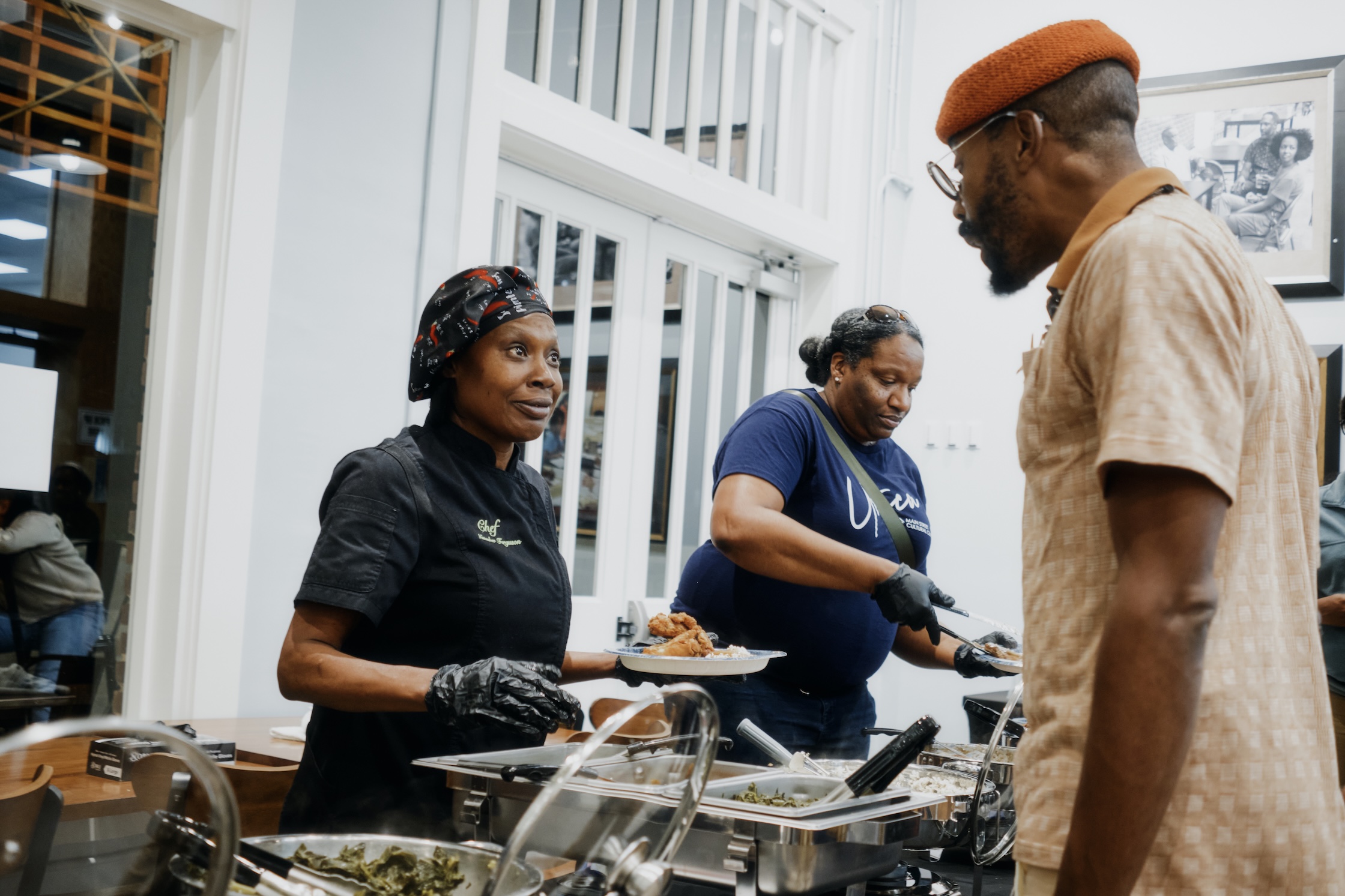
So Sipp bought the building, renovated the space and turned it into a cultural center complete with an event space and a commercial kitchen. I’m not exaggerating when I say this, it is one of the most beautiful commercial kitchens I’ve ever seen.
During the visit, Carlton said something that stuck with me: At the grand opening of the Main Street Cultural Center, someone from Jackson—a much larger city—said ‘Wow, I would have never expected to see something like this in your town!’
I know it was meant as a compliment, but it made me think: Why shouldn’t Utica’s residents expect something as excellent as the Main Street Cultural Center?
Excellence isn’t a finite resource.
It can be cultivated everywhere, from good ideas, inclusive processes, and the understanding that the place you live is the soil you grow from.
We should all expect excellence for all of our communities. As funders, we nourish excellence when we invest in community self-determination—the ability for a community to control its own destiny.
There are people in the U.S. right now who want us to think that collective change is an impossible uphill battle. They want communities like Utica to believe that the only way forward is to become angry and defensive, to turn against one another and lose hope in our future.
I’d like to counter that narrative: Even when it seems like all the news is bad, there is good work worth supporting on the ground—and it’s happening all the time, everywhere. That work isn’t easy, but it can be simple. It’s the work that has always made communities thrive.
Through this series, I’d like to explore this question:
How can we—as funders, philanthropists, organizers, or just people who care—better support communities as they work to control their own futures?
If you’d like to join me on this journey, you can follow along here at the Knowledge Commons, or by subscribing to our newsletter.
Looking forward. Be well.
Erik Takeshita